Churn Diagnosis
Assigning owners to the root causes of customer loss
Turn a suspected customer-loss cause into a bounded issue with an accountable owner, evidence check, repair and review date.
Archive
Churn Diagnosis
Turn a suspected customer-loss cause into a bounded issue with an accountable owner, evidence check, repair and review date.
Retention Operations
Set a service-case promotion hold, recheck it near sending and release it after the agreed remedy is complete.
Cohort Analysis
Define the first qualifying purchase, resolve identity and order-status edge cases, and document a cohort start date that colleagues can reproduce.
Repeat Purchase
Identify qualifying repeat orders, subtract relevant variable costs and report observed contribution with its data limits.
Churn Diagnosis
Checking whether product expectations match the purchase page: practical criteria and a clear evaluation process for marketing teams.
Win-Back Campaigns
Assess Australian consumer rights first, then decide whether an additional gesture addresses remaining inconvenience.
Repeat Purchase
Choose a category-appropriate repeat-purchase metric with a clear numerator, eligible customer group, purchase definition and follow-up window.
Win-Back Campaigns
Use order, service and customer evidence to choose a win-back response, resolve owed remedies and check discretionary incentives.
Repeat Purchase
Choose accurate setup, care, service and compatibility help that supports owners of durable products after purchase.
Churn Diagnosis
Investigate apparent customer churn through interviews, purchase histories and findings that distinguish reported reasons from observed facts.
Win-Back Campaigns
Design a fair reminder versus incentive test and judge what the offer adds after its cost.
Retention Economics
Compare a practical service change with a price incentive using customer cause, incremental cost and later contribution.
Retention Economics
Compare the next acquisition and retention investments using incremental contribution, full costs and a shared decision horizon.
Cohort Analysis
Assign a consistent acquisition source, compare mature first-purchase groups and account for product mix before interpreting repeat-purchase differences.
Cohort Analysis
Compare product retention with appropriate buying opportunities, mature customer counts and clearly labelled follow-up windows.
Churn Diagnosis
A customer who does not buy again may have lost interest, bought elsewhere or had a disappointing first order.
Churn Diagnosis
Diagnose a retention problem by defining eligible repeat purchases, checking buying cycles and investigating plausible causes before choosing an action.
Win-Back Campaigns
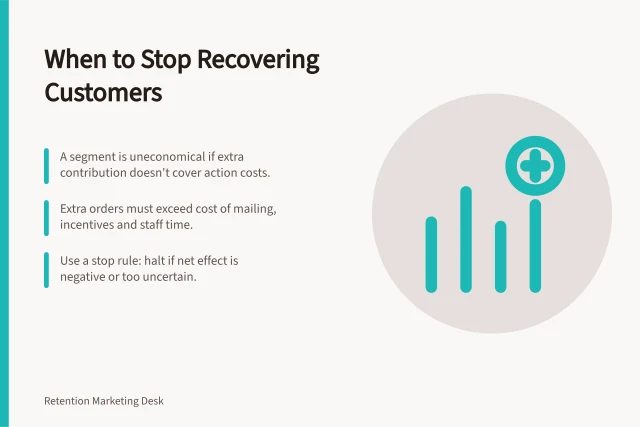
Decide whether a proposed segment recovery action can cover its full cost, and when to narrow, change or stop it.
Retention Operations
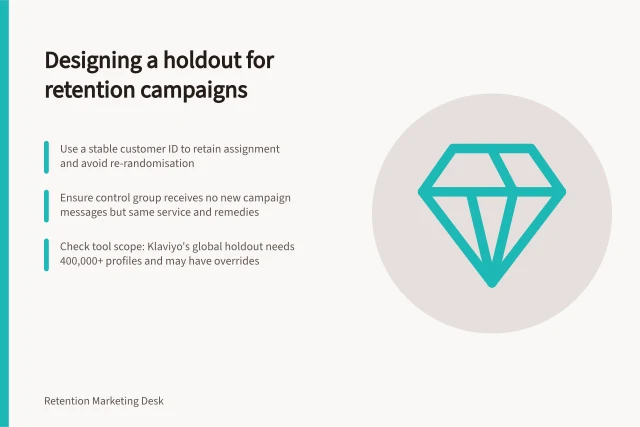
Define the control treatment, assign customers once, check what the platform withholds and measure a campaign against its holdout.
Churn Diagnosis
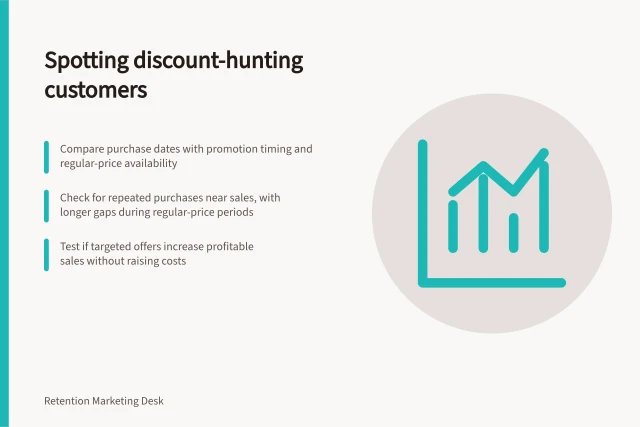
Use purchase and promotion timelines to investigate discount waiting, then test whether another offer adds profitable orders.
Retention Economics
Decide when a retention discount is justified, limit its cost and measure whether it adds profitable repeat purchasing.
Repeat Purchase
Separate post-purchase interactions, genuine buying opportunities, observed sales and conditional revenue forecasts.
Repeat Purchase
Avoid treating every one-time gift purchase as the beginning of a replenishment or repeat-buying cycle.
Repeat Purchase
Use comparable repeat purchases to estimate a reorder window, while accounting for pack size, sparse histories and buyers who have not reordered.
Retention Economics
Forecast future customer contribution with a stated horizon, cost definition, order assumptions and sensitivity cases.
Churn Diagnosis
Estimate contribution and avoidable costs at risk from a specific churn driver without treating association as proven lost sales.
Churn Diagnosis
Delivery trouble can damage a first purchase, but a low repeat rate alone does not show that delivery caused it.
Retention Operations
Verify a delayed or damaged order, give an accurate update, arrange the appropriate solution and confirm the outcome.
Churn Diagnosis
Build a clear churn-reason codebook, retain multiple reasons and unknowns, and connect each category to a practical check.
Repeat Purchase
Adjust replenishment timing for multi-unit orders without assuming every extra unit extends supply. Check packs, returns and later purchases first.
Churn Diagnosis
Find historically valuable customers whose recent pattern has changed, while checking service and category context before outreach.
Win-Back Campaigns
Set a product-specific win-back boundary from purchase gaps, audit cases near it and separate candidates from customers eligible for contact.
Churn Diagnosis
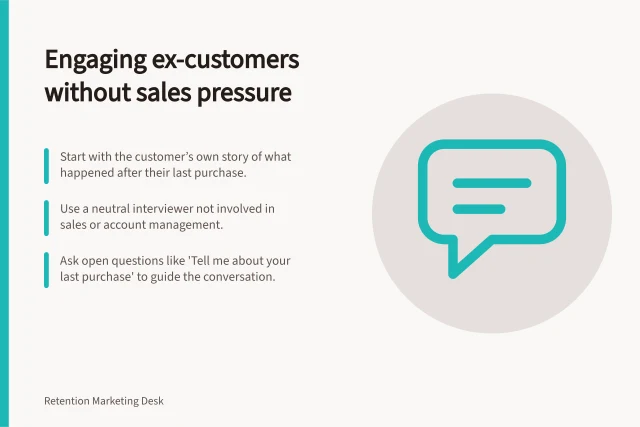
Invite former customers to voluntary research interviews, ask neutral questions and handle complaints without defending a sale.
Retention Operations
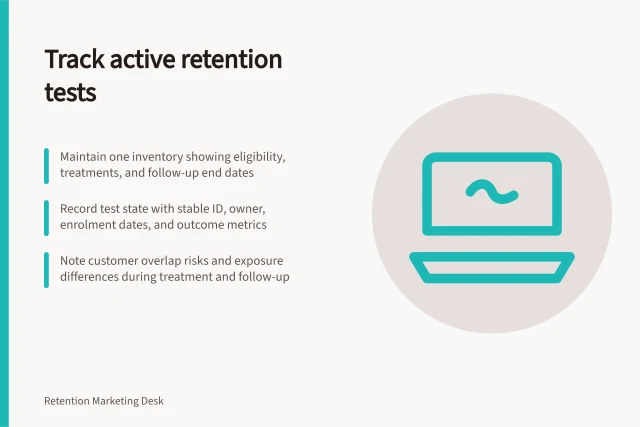
Record test ownership, assignment, live exposure, changes and follow-up so retention experiments can be operated and interpreted.
Retention Operations
Make retention segments understandable enough for operators to explain, maintain and safely act on.
Retention Economics
Calculate a practical offer ceiling from order contribution, then check discounts, stacking, refunds and incremental value.
Churn Diagnosis
A complaint that is marked “solved” in a ticket system may still feel unresolved to the customer.
Repeat Purchase
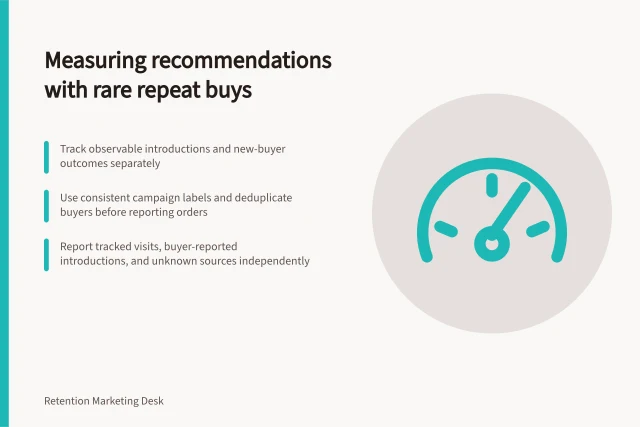
Separate recommendation intent, sharing, referred enquiries and completed sales when existing customers rarely repurchase.
Win-Back Campaigns
Define first return, later repeat purchase and contribution per assigned customer to assess recovery after a win-back discount.
Churn Diagnosis
Separate remedy completion, customer feedback and later purchasing to assess a resolved complaint without overstating the result.
Repeat Purchase
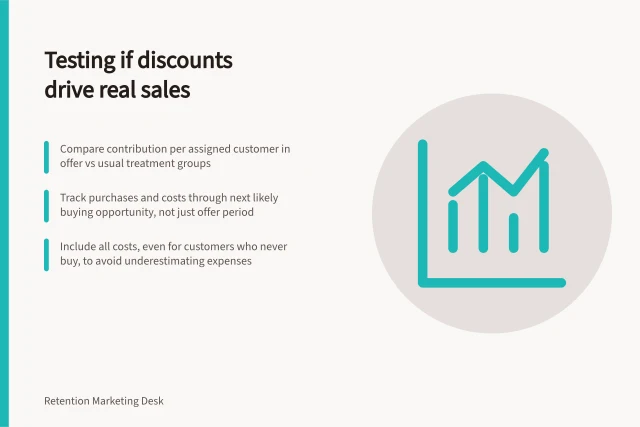
Compare a targeted offer with usual treatment using all purchases and contribution per assigned customer.
Repeat Purchase
Use a no-reminder control and complete order contribution to see whether replenishment messages add profitable repeat purchases.
Retention Operations
Set useful activity, capacity and review targets for durable-product customers without forcing short-term repeat sales.
Retention Operations
When customers repeatedly report the same problem, an extra discount email can create another order with the same failure.
Cohort Analysis
Check elapsed time, calendar season, curve calculation and cohort maturity before calling a drop in repeat purchasing churn.
Win-Back Campaigns
Build an explainable offer-decision record with the eligibility rule, send checks, offer version and actual outcome.
Retention Economics
Evaluate repeat purchasing by separating observed order contribution, forecast customer value and the extra margin a retention action might add.
Repeat Purchase
Plan replenishment reminders around likely need, check eligibility before sending, and measure whether they add profitable repeat purchases.
Retention Operations
Define eligible returners and report their count, orders and net sales together so changes in customer reach and spending stay visible.
Retention Operations
Resolve a poor customer experience, confirm the remedy, pause unsuitable promotions and assess what happened afterwards.
Cohort Analysis
Build purchase cohorts with a clear return rule, compare customers at equal elapsed time, and investigate changes without treating inactivity as proof of churn.
Retention Operations
Build a retention dashboard that separates eligible customers, repeat orders, revenue, subscriptions and uncertain forecasts.
Churn Diagnosis
Plan retention experiments with a clear comparison, stable customer assignment and outcomes that account for contribution and purchase timing.
Cohort Analysis
Plan useful post-purchase support, recommendations and relevant future sales for products customers buy only occasionally.
Retention Economics
Compare retention proposals by added contribution, full costs, evidence, delivery capacity and a clear review point.
Retention Operations
Set up the operating records, contact checks, escalation owners and review decisions that keep a retention programme coherent.
Retention Operations
Build retention segments around purchase behaviour and a distinct next action, then check data quality and contact eligibility.
Churn Diagnosis
Learn what repeat purchases can show, what loyalty requires beyond order data, and how to write a useful customer problem statement.
Repeat Purchase
Look beyond the first discounted order to compare later full-price purchases, order timing and contribution.
Retention Operations
Check stacking, checkout outcomes, contribution and customer-facing claims when retention incentives overlap.
Retention Operations
Check whether an operational fix was delivered, compare later customer outcomes fairly and qualify any claimed retention effect.
Churn Diagnosis
Assess a quiet customer history against product buying opportunities, comparable purchase gaps and complete observation windows.
Churn Diagnosis
Use neutral questions and purchase context to distinguish an outlay barrier from a product or service value problem.
Repeat Purchase
Keep one-time repeat orders, successful renewals, active subscriptions and prepaid fulfilments distinct in retention reporting.
Retention Economics
Build a provisional retention spending cap from plausible extra contribution, costs and forecast uncertainty.
Retention Economics
Display customer-value forecasts with a clear horizon, assumptions, scenarios or justified intervals, and a separate observed-value figure.
Churn Diagnosis
Build a customer timeline and distinguish records that support, complicate or cannot test a stated churn reason.
Repeat Purchase
Design a fair test of product-informed reminder timing versus a fixed delay, with consistent eligibility, suppression and outcome windows.
Win-Back Campaigns
Plan a win-back campaign around buying opportunities, relevant responses, Australian messaging requirements and profitable return behaviour.