Churn Diagnosis
Part of Retention investment decisions
Estimating the cost of an unresolved churn driver
Estimate contribution and avoidable costs at risk from a specific churn driver without treating association as proven lost sales.
Estimate the cost of an unresolved churn driver as a range: the contribution fixing a specific problem might preserve, plus the avoidable costs of handling that problem while it continues. Begin with affected customers and a credible next buying opportunity. A complaint count or the total value of all later missing orders is not a measured loss caused by the issue.
Describe one driver precisely
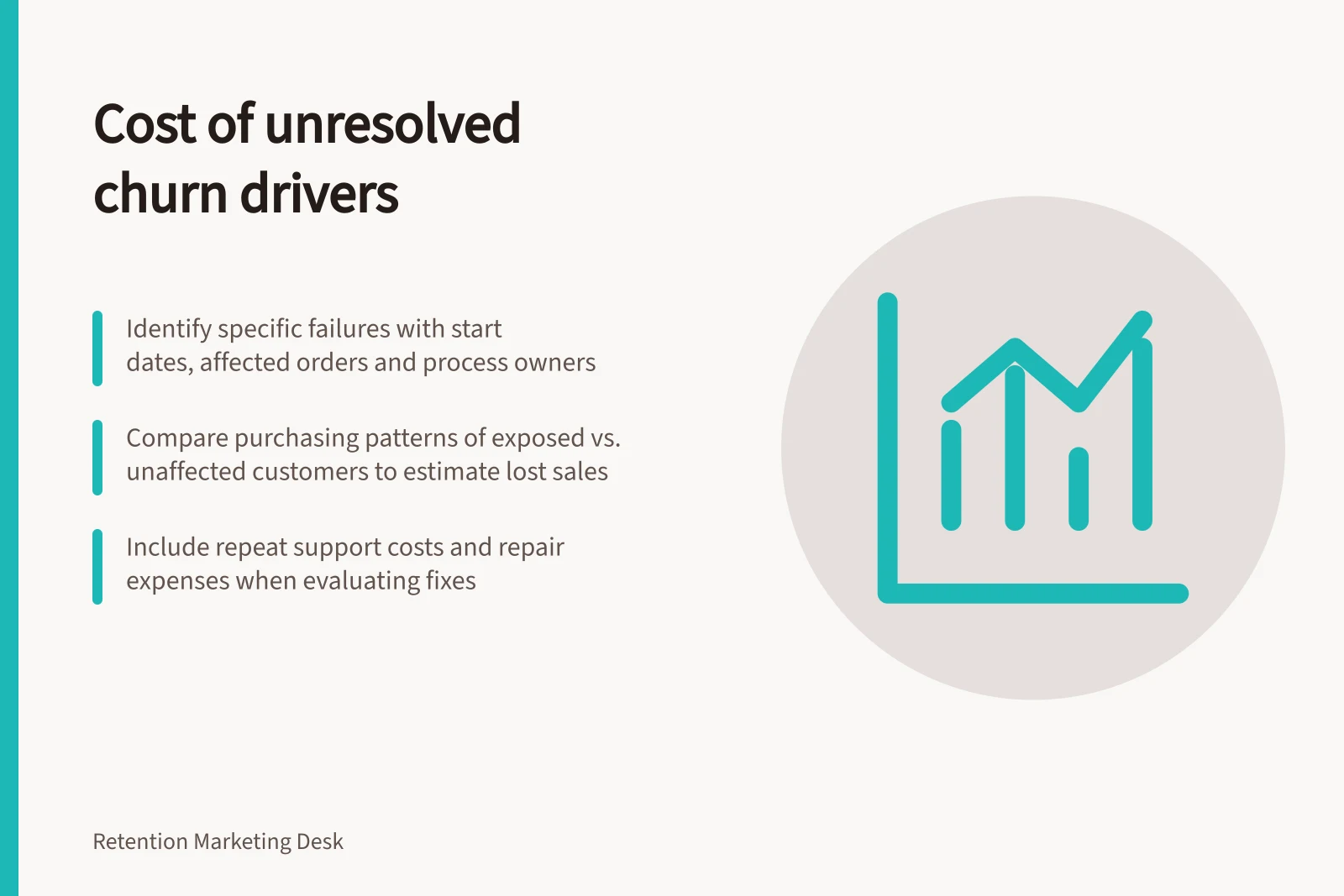
Name the failure, affected orders, start date and process owner. “Delivery is poor” is too broad to cost. “Orders from this dispatch route missed the stated handoff on these dates” can be checked against fulfilment and customer records. Separate customers who experienced the event from those merely in the same period.
Before estimating later loss, check that customers had enough time and a plausible reason to buy again. A durable item, large final order or seasonal purchase can create a long quiet period without indicating churn. Decide whether the next qualifying purchase is in the same product group, a suitable substitute or anywhere in the store. Apply the same treatment to refunds and replacement orders across groups.
Build an exposure range
Count affected customers with a mature observation window. Compare their later purchasing with customers who had similar products, entry periods and buying opportunities but no recorded exposure to the problem.
The difference is an association. Customers who encountered the failure may differ in other ways, and some failures may be missing from the records.
Use that comparison to inform scenarios for the purchasing a successful repair might preserve. Apply an order contribution estimate based on sales after discounts and refunds, less product and relevant variable costs.
Keep missing costs visible. Do not multiply by forecast lifetime value if the same future orders are already represented in the estimated gap.
Scenario contribution preserved = mature affected customers × assumed extra qualifying orders per affected customer if fixed × contribution per extra order.
For a hypothetical example, assume 200 mature customers were affected, a fix would add 0.10 qualifying orders per affected customer over the next buying window, and each added order would contribute A$40. The scenario gives 20 extra orders and A$800 of contribution.
The 0.10 is an invented effect assumption, not an observed causal estimate. At 0.02 the figure is A$160; at zero, no purchasing benefit is assigned. These are possible benefits of a fix under assumptions, not proven costs of churn.
Add continuing costs and compare a repair
Estimate repeat contacts, rework, extra delivery or support expense and discretionary credits associated with the failure. Count only costs not already netted from order contribution.
Forecast how many additional customers may be exposed before a proposed repair takes effect; keep them separate from the mature customers in the historical scenario. Do not count the same expected loss across several cohorts.
Set development, training, supplier and running costs of a proposed repair beside the avoidable-cost scenarios. Some work should proceed independently of an estimated sales benefit.
Use the estimate for a bounded decision
Check whether the repair reduces the named failure before attributing a later retention change to it. Preserve the affected population, dates, comparison choice, cost coverage and assumptions.
If even a plausible higher benefit would not justify a large discretionary redesign, consider a smaller diagnostic or phased repair. If the issue continues to affect customers, assign an owner and review date while the commercial estimate remains uncertain.