Cohort Analysis
Part of Retention dashboards
Comparing retention across products with different usage cycles
Compare product retention with appropriate buying opportunities, mature customer counts and clearly labelled follow-up windows.
Compare product retention only once each group's customers have reached a plausible next buying opportunity. A short return window may suit a regularly used item but be premature for a durable one. Show each group's window, mature count and qualifying return before placing rates side by side.
Build product groups for the comparison
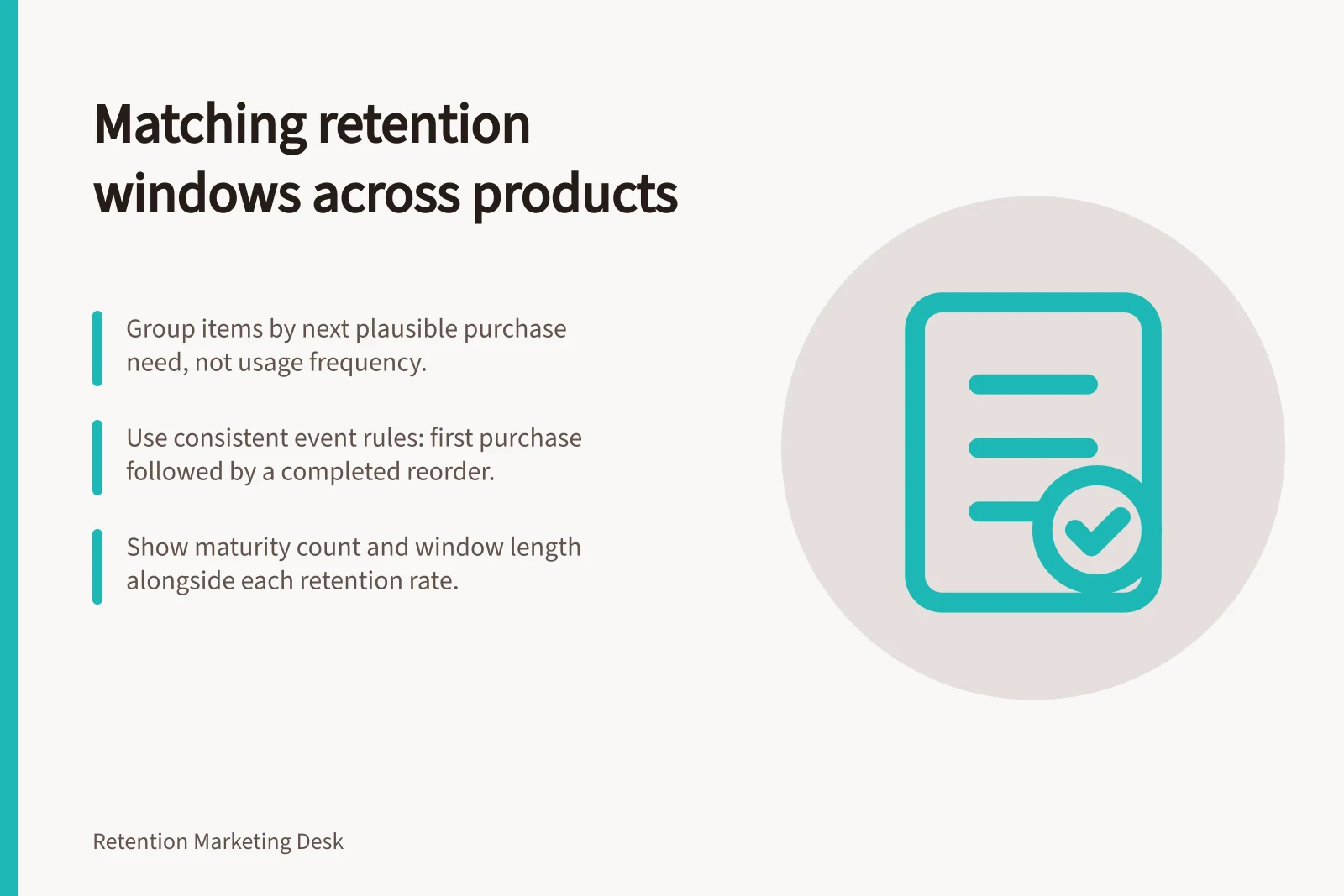
Group items by the need that could prompt another relevant purchase. Decide whether another pack size, a replacement format or a suitable substitute qualifies. Keep seasonal and durable purchases separate when their next opportunities differ. For a mixed first basket, document a primary-product rule or show a separate mixed group.
Apply consistent event rules across groups: a defined first purchase followed by another completed purchase for the stated need. Specify how refunds, remedy replacements and subscription activity are treated. This keeps the purchase event clear even when buying intervals differ.
A standard cohort report may group customers by a shared starting event and show later activity over elapsed periods. It may not capture the custom completed-purchase, substitute or product-opportunity rules described here; those may need a separate calculation.
Put maturity beside the rate
Choose a follow-up window for each group based on a plausible opportunity to buy again. Count only customers who have had the full window. Display the starting count, mature count, returning count, rate and window.
| Product group in a proposed report | Return question | Maturity note |
|---|---|---|
| Frequently replaced consumable | Was there a qualifying reorder within its chosen window? | Check pack size and quantity before applying the window. |
| Seasonal item | Was there a relevant purchase by the next comparable occasion? | A current group may still be awaiting that occasion. |
| Durable item | Was there a relevant follow-on purchase within a defensible horizon? | A short quiet spell may say little about return behaviour. |
These are reporting examples, not category benchmarks. An all-store rate remains useful, but it can move when product mix changes even if each group's rate stays the same. Show each group's share of eligible customers beside the overall figure.
Key metrics for retention comparison
- Starting count
- Number of customers in the cohort at first purchase
- Mature count
- Customers who have had the full follow-up window
- Returning count
- Customers who made a qualifying repeat purchase
- Retention rate
- Returning count ÷ Mature count
- Follow-up window
- Plausible time to next purchase based on product usage cycle
Say which comparison is fair
Rates measured over different windows can guide decisions within each group. Their ranking does not establish which product retains customers better: one may offer many more chances to buy. For a direct comparison, choose an outcome both groups can reasonably reach by the same elapsed point. Alternatively, compare each group with its own earlier groups at the same maturity.
Repeat-order histories can help propose a window, but their observed intervals come only from customers who returned. They cannot show when every one-order buyer will return. Check quantities, stock interruptions, season and follow-up available to recent buyers. If no defensible window exists, label the group immature or uncertain.
When a mature group's returning count changes, first check identity matching, first-product mix, stock and qualifying later purchases. Schedule another review for a durable-product group that has not reached its next plausible opportunity. This comparison locates a reporting difference; it does not diagnose why customers did or did not buy.
Steps to fairly compare retention across products with different usage cycles
- Group products by need-based purchase triggersSeparate seasonal, durable and frequently used items; define what constitutes a valid return purchase (e.g., same or substitute product).
- Apply consistent event rulesDefine first purchase and subsequent completed purchase; clarify treatment of refunds, replacements and subscriptions.
- Only include mature customersExclude customers who haven’t yet reached the full window; label immature groups as such.
- Compare only when both groups are at similar maturityAvoid comparing early-stage seasonal items with mature durable ones; use same-maturity comparisons instead.