Churn Diagnosis
Part of Churn research
Interviewing former customers without a defensive sales pitch
Invite former customers to voluntary research interviews, ask neutral questions and handle complaints without defending a sale.
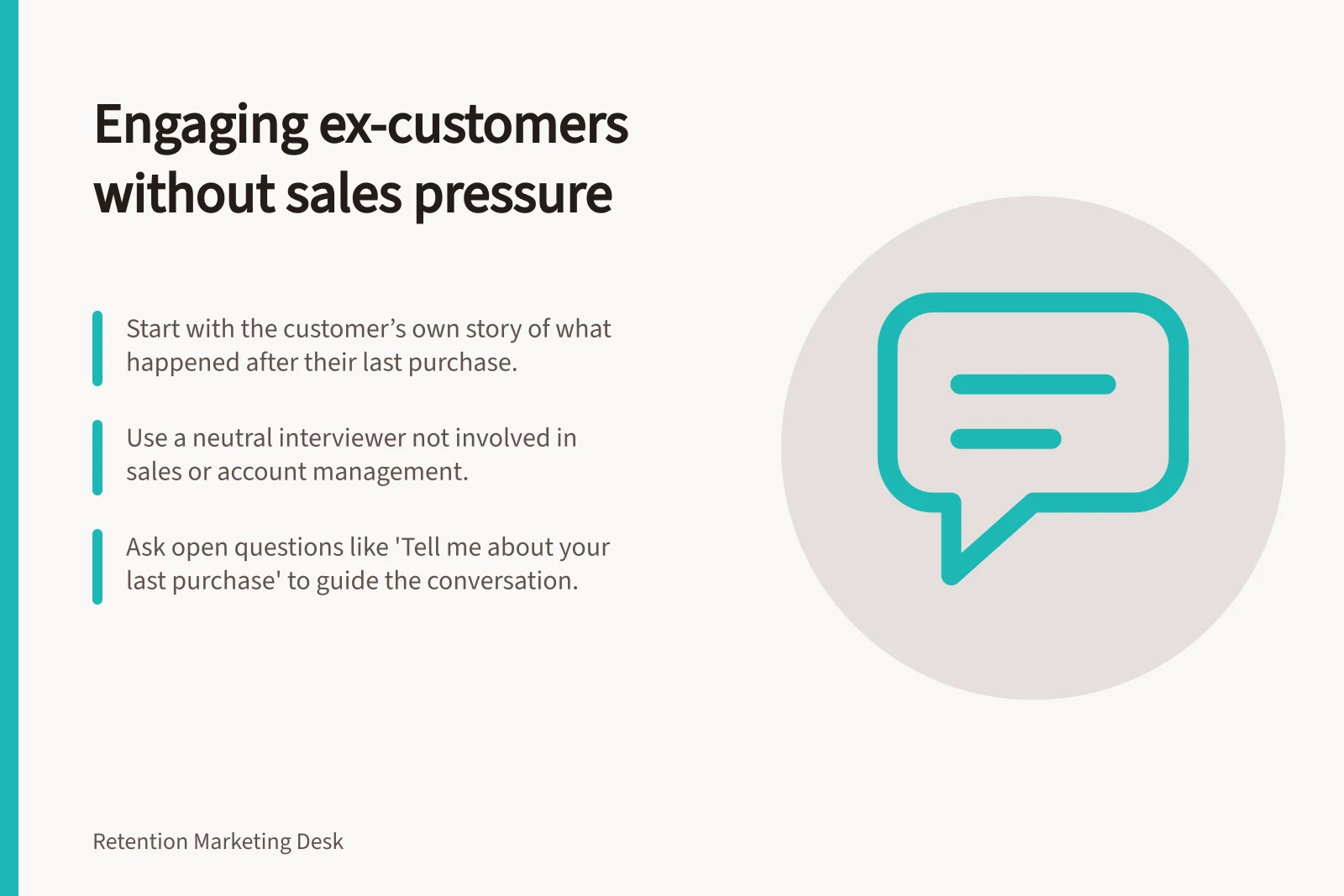
Start with the former customer’s account of what happened after their last relevant purchase.
Keep the conversation voluntary and separate from selling. The interviewer’s job is to listen, not defend the product or introduce an offer.
Use someone who does not own the account or sell the product. Do not assign the customer’s salesperson or account manager to conduct the interview.
Invite people for research
Define the inactive group using a purchase period relevant to the question, and record the product and period used. Include people without recorded complaints as well as those who contacted support.
Do not assume that people who do not respond hold the same views as those who take part.
An invitation might say: “We’re reviewing what happened after customers’ recent purchases with us. Would you be willing to have a brief conversation about your experience? Taking part is optional. We’ll explain how your feedback will be used, and this is not a sales call.”
State the expected duration once it is known, make declining easy and ask before recording. If the person declines a recording, take notes instead.
If the organisation is covered by the Privacy Act 1988, the Australian Privacy Principles govern the collection, use and disclosure of personal information. Explain why you are asking and how feedback will be used; do not pass individual answers to sales unless that use has been explained and is permitted.
Privacy and compliance considerations under Australian law
- Relevant legislation
- Privacy Act 1988 (Cth)
- Key principle
- Australian Privacy Principles (APPs) apply to personal information collection
- Required disclosure
- Explain why feedback is collected and how it will be used
- Data sharing restriction
- Individual feedback cannot be passed to sales unless permitted and explained
Follow the customer’s decision
Begin with a concrete, open question: “Tell me about the last time you bought this product from us.” Then ask what they needed next, whether they looked for the same product and what they did.
Useful prompts include:
- “What options did you consider?”
- “What mattered most in that choice?”
- “Was anything about the order or product helpful or difficult?”
- “What have I missed about your decision?”
Ask one thing at a time. “Was our price too high because delivery was poor?” suggests two possible causes in one question.
If the customer says “expensive”, ask what they mean. They may be comparing another offer, the upfront outlay or the benefit received.
Respond without arguing
If a customer describes an error, acknowledge their account and ask what they expected, what happened and what they did next. Do not debate whether a posted policy was technically correct.
If they ask for a discount or a new deal, say: “I’m here to hear about your experience, not make an offer. Would you like to continue the research conversation?” If they want a separate follow-up, explain what would be shared and with whom before passing on the request.
If they request a remedy, seek their agreement to route it through the normal service process. Do not promise an outcome the interviewer cannot deliver.
Near the end, summarise what you heard and ask whether it is accurate. Invite anything else they want to add.
Use a consistent note record: interview date, question, the customer’s words, actions they describe and your interpretation, clearly labelled as such. Preserve their wording and keep your interpretations separate.
The interview can suggest a plausible explanation and a record to check. It cannot establish how common that explanation is among everyone who stopped buying.