Retention Operations
Part of Retention after a bad customer experience
Following up after a delayed or damaged order
Verify a delayed or damaged order, give an accurate update, arrange the appropriate solution and confirm the outcome.
Follow up with a verified status, an owner, a next action and a date for the next update. Keep the case open until the agreed solution is completed. An apology alone is neither an order update nor a remedy.
Establish what happened
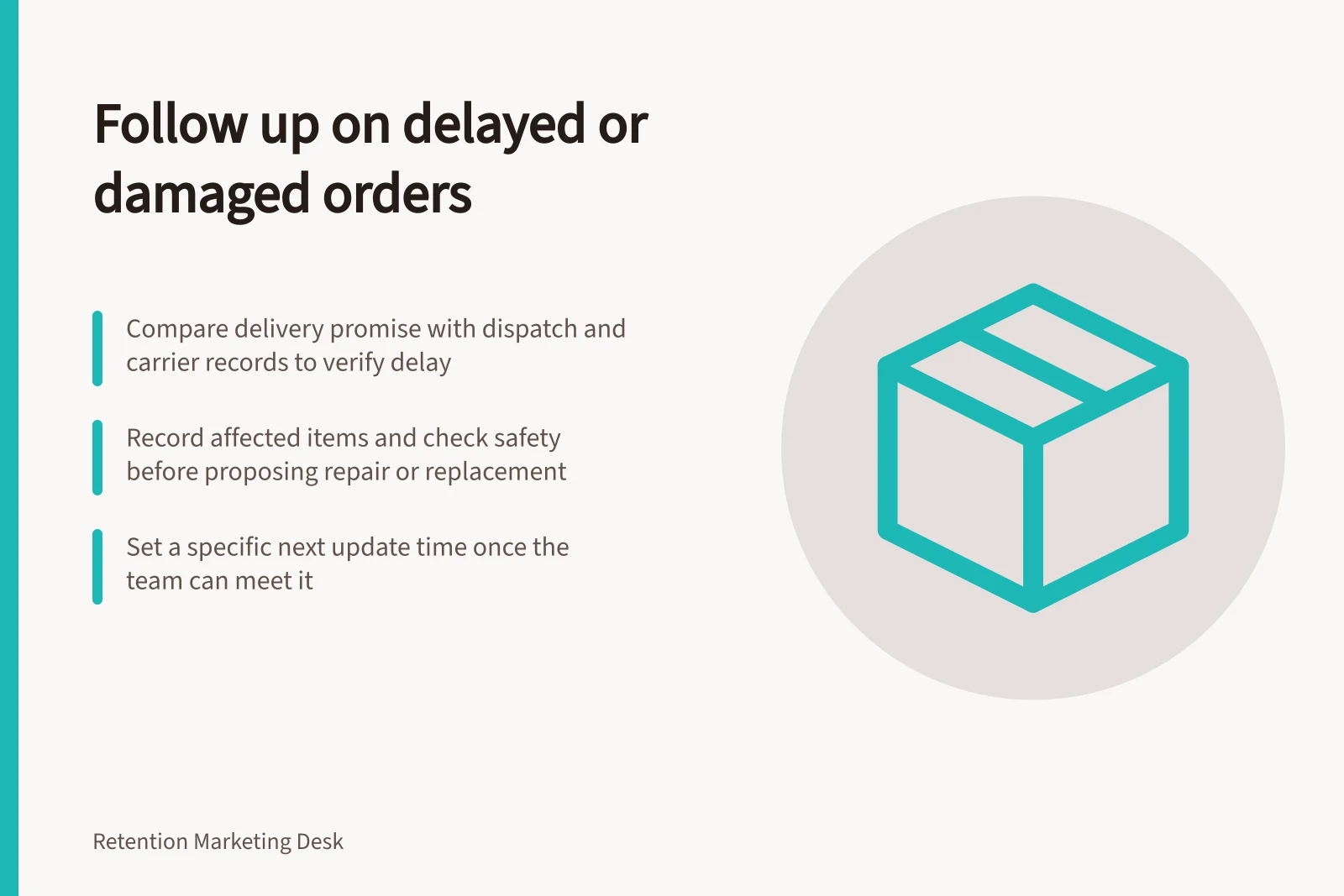
For a delay, compare the delivery promise at purchase with order, dispatch and carrier records. Distinguish an order still with the seller from one in transit, one with an uncertain scan and one confirmed lost.
Do not turn a carrier estimate into a firm arrival promise. If supply is delayed, explain the likely timing and available solutions as accurately as the evidence permits.
For damage, record what arrived and which items are affected. Ask only for evidence needed to assess the problem.
Check whether an item is unsafe or unusable before proposing repair or continued use. Avoid making the customer repeat the account to each team.
Give a useful update
A first response can acknowledge the specific problem, say what has been verified, name the next action and give the next update time. If the answer depends on a carrier or supplier, say so while keeping responsibility for the customer response with the seller.
For consumer-guarantee problems with a product, ACCC guidance explains consumer rights and responsibilities under the consumer guarantees. The ACCC does not resolve individual disputes or give legal advice about a repair, replacement or refund.
For example: “I’m sorry the parcel arrived with a damaged item. We have your order details and are checking which part is affected. We will update you when that check is complete. You can reply here if another item is damaged.”
Set a specific update time in a real case once the team can meet it.
Match the action to the problem
A paid-for order that cannot be supplied on time or within a reasonable time needs a solution.
For detailed remedy selection when a damaged product engages consumer guarantees, see S038-P11-S03.
If part of an order is affected, explain what will happen to that part and to the rest. Confirm a replacement's dispatch only when verified. If a refund is agreed, distinguish its processing from the time it takes to appear in the customer's account.
Consumer Rights for Delayed or Damaged Orders (ACCC Guidance)
- Delayed orderIf not delivered within a reasonable time, customer may be entitled to a refund, replacement or repair.
- Damaged itemIf unsafe or unusable, customer can request repair, replacement or refund under consumer guarantees.
- Partial damageExplain what happens to affected part and remaining items; confirm replacement dispatch only when verified.
- Refund timingDistinguish processing time from time it takes to appear in customer’s account.
Close the loop
A carrier investigation can close while the order remains unresolved. Check the agreed outcome: delivery or replacement received, refund processed, or repair completed. Send a factual confirmation and ask whether anything remains wrong. Reopen the service case if the customer reports that the item is still missing or damaged.
Record the original promise, issue, agreed remedy, owner, update dates and completion evidence. Keep sales invitations out of recovery updates, and handle any later promotion separately.