Retention Operations
Part of Retention after a bad customer experience
Avoiding promotional messages before a service problem is resolved
Set a service-case promotion hold, recheck it near sending and release it after the agreed remedy is complete.
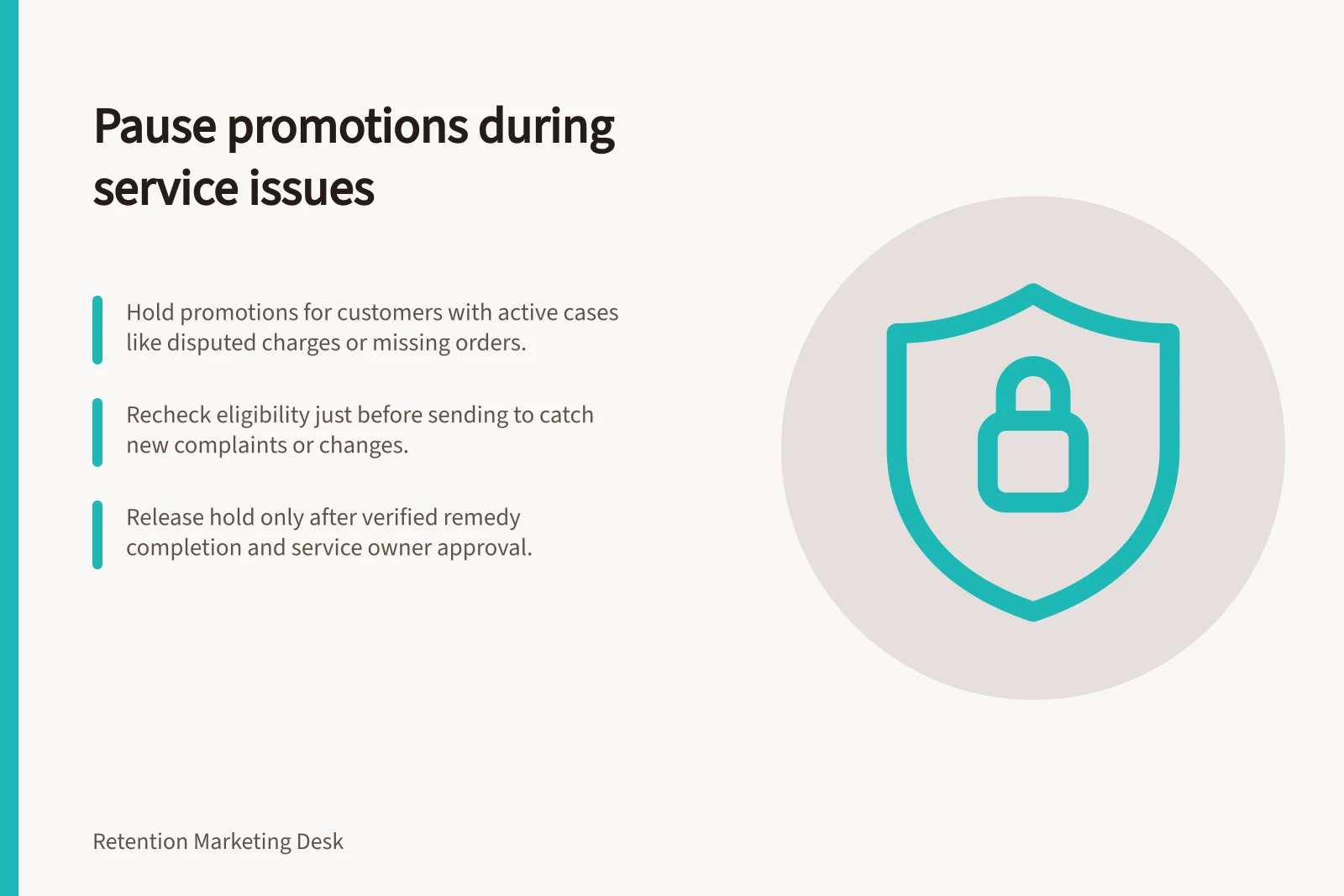
Pause discretionary promotions for any customer with an active service problem. Recheck the case as close to each send as the process allows; a complaint can open after an audience is built. The hold needs an entry rule, an owner and a verified release condition.
Define which cases pause promotion
Include cases where a sales message could conflict with work still owed: missing order, damaged item, disputed charge, promised refund, replacement in transit or complaint awaiting a decision. Include reopened cases. Decide how to identify the affected customer across planned channels while limiting access to detailed case notes.
Use clear working states such as active, remedy pending, completed but unconfirmed and resolved. These are operating labels, not legal categories. A closed ticket should not release a hold when a promised action is still pending. Send stale or unclear records for review.
Service Case States and Promotion Eligibility
- Active
- Promotions paused – service issue ongoing
- Remedy Pending
- Promotions paused – promised action not yet completed
- Completed but Unconfirmed
- Promotions paused – customer hasn’t confirmed resolution
- Resolved
- Promotions eligible – only after verification and permission check
Check at the point of send
Apply the hold when building an audience, then recheck delayed flows, scheduled campaigns and manual uploads near dispatch. A new complaint, opt-out or purchase can change eligibility during the wait. If a channel cannot reliably apply the hold before sending, pause that send path or use a controlled manual check until the process is dependable.
Before you use the rule, test representative cases: a complaint opened after audience selection, a refund promised but not processed, a replacement dispatched but not received, a reopened case and a genuinely resolved case. Inspect the final outbound queue, including duplicate customer records that may share a contact address.
Promotion Hold Process for Service Cases
- Apply hold when building audiencePause promotions for customers with active service issues such as unresolved complaints, pending refunds or replacements in transit.
- Recheck before sendingVerify case status just before dispatch—new complaints or changes in preference may affect eligibility.
- Confirm remedy completionOnly release the hold after the agreed service outcome is delivered and verified by the service owner.
- Check marketing permissionsEnsure customer has not opted out and that their preferences align with the message type.
- Document and reviewRecord why the hold was applied and released; review errors to refine the process.
Pre-Send Verification Checklist
- Is the case still active?Check for unresolved complaints, pending refunds or replacements in transit.
- Has a new complaint been logged?New issues may invalidate prior eligibility.
- Are there duplicate records?Ensure no shared contact details bypass hold rules.
- Is the customer's consent current?Confirm opt-in status and channel preferences.
- Has the remedy been delivered?Do not assume resolution based on time elapsed or ticket closure.
Keep service contact focused on service
Continue necessary order and remedy updates. State what happened, what remains outstanding and when the customer will hear next. Do not add a “shop again” code to a complaint update just because it uses a service template. A promotional offer can distract from the service update and blur whether the message resolves the issue or sells.
Before sending later marketing email or SMS, check relevant channel requirements and the customer’s recorded permissions and preferences. Keep any existing marketing suppression in place when the service case is resolved.
Release the hold deliberately
Release the hold after the agreed remedy is completed under the documented rule and the service owner verifies that status. Do not infer resolution from elapsed time or ticket closure. If the customer says the outcome is still wrong, reopen service and retain the hold.
A resolved case makes a customer eligible for consideration, not automatically suitable for promotion. Check channel permission, recent purchases, message relevance and expressed preferences. Record why the hold was applied and released without copying detailed complaint notes into campaign fields. Review mistaken sends and mistaken holds to improve the rule.