Retention Economics
Part of Discounting and customer retention
Comparing a service improvement with a price incentive
Compare a practical service change with a price incentive using customer cause, incremental cost and later contribution.
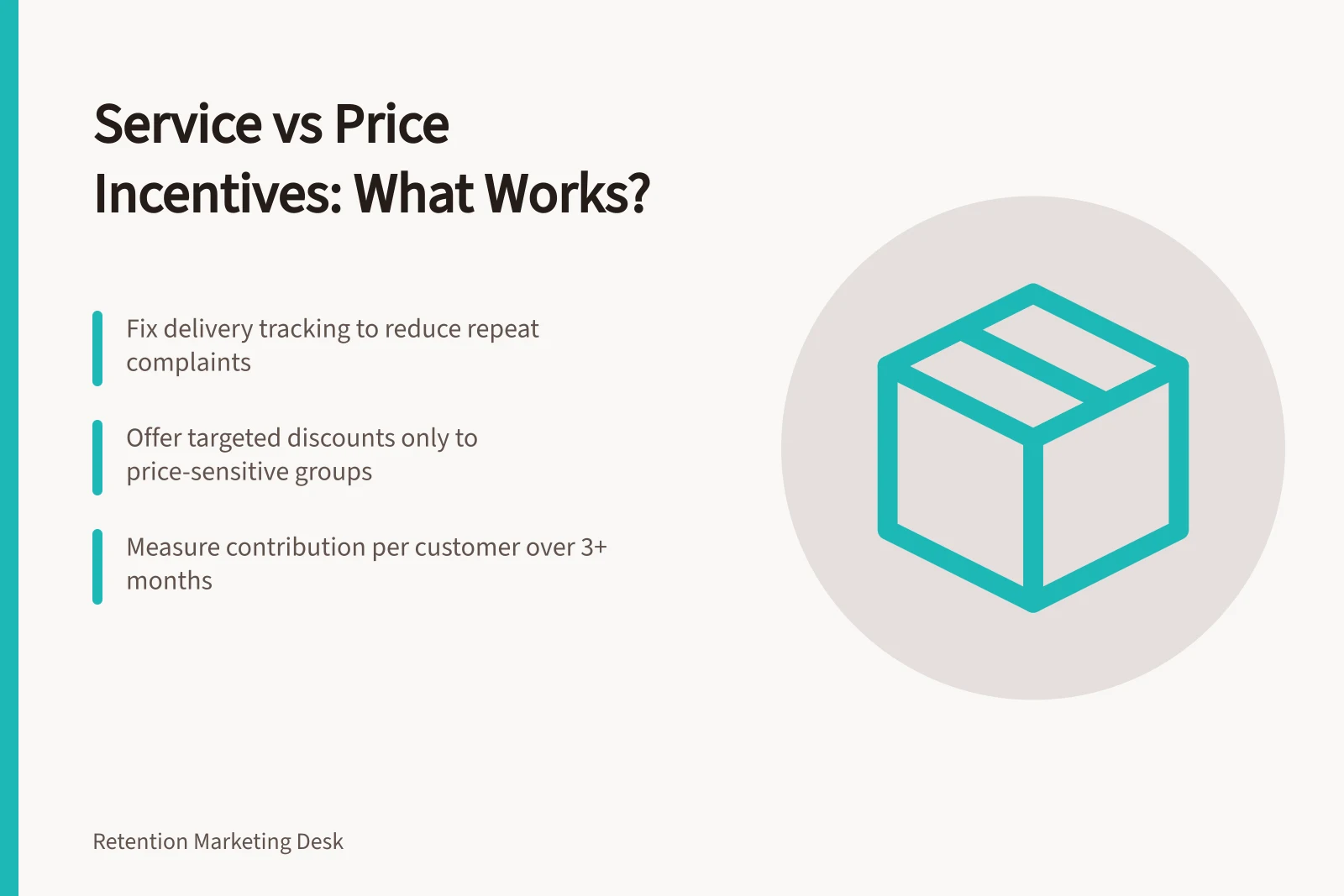
Compare a service improvement with a price incentive by asking which addresses the reason for lost purchases and which adds more contribution after its cost. If customers cannot track delivery or get timely answers, a cheaper price may win another order without fixing the experience. If service is dependable but a defined group faces a price barrier, a limited incentive may be worth testing.
Define the problem
Review recent orders, complaints and customer messages for the group you hope to retain. Separate service failures, unclear promises, changed needs and explicit price objections. An objection to ‘value’ may concern what was delivered as much as the amount paid. Buying with a code does not, by itself, establish price sensitivity.
Keep consumer guarantee rights and obligations separate from this comparison. The ACCC provides information about these rights and obligations but does not resolve individual disputes about whether guarantees have been met or what remedy applies.
The comparison here concerns an additional improvement, such as clearer tracking updates or a faster support handoff. The other option is an optional future-purchase incentive.
Specify and cost each option
Describe actions the business can deliver. The service option might give eligible customers a reliable delivery update and a direct support contact when an order is delayed. The price option might reduce the next eligible order by a defined amount.
Specify eligibility, timing, what the customer receives and the follow-up period. Do not promise faster delivery if the operation cannot provide it.
Cost both options on the same basis. A discount reduces revenue on redeemed orders, including some orders that would have happened anyway. A service change may require staff time, software or a process change, with costs shared across many customers.
Include costs that actually change under each option. Do not treat service or remedies already required by law as optional benefits whose cost can be withheld from a comparison group.
Choose a fair comparison
Where each additional action can be delivered to individuals, randomly assign eligible customers to the service option, the price option and, if appropriate, usual service without a new offer. Keep availability, other messages and follow-up time as similar as possible.
If a service change applies to a whole warehouse or team, individual assignment may be impractical. A phased rollout across comparable operations may help, but differences between locations and periods weaken the comparison.
Set the primary measure before starting: contribution per eligible customer over a period long enough for a plausible repeat purchase. Also track repeat purchasers, complaints, opt-outs and whether the original service problem recurs.
Count everyone assigned, including customers who ignore the offer or never contact support. Redemption and support-contact rates describe use; neither alone measures retention benefit.
Service Improvement vs Price Incentive: Key Factors for Retention
- Eligibility CriteriaDefined by order history, complaints or service issues; not based on discount redemption alone
- Cost BasisIncremental cost only: staff time, software, process change (service); revenue loss on redeemed orders (price)
- Primary MeasureContribution per eligible customer over a repeat-purchase period
- Follow-Up TrackingRepeat purchases, complaints, opt-outs, recurrence of original issue
- Random AssignmentWhere possible, random allocation to service, price or control group
Read the result
A service change may justify its shared cost if it reduces a recurring problem and improves later purchasing. A price incentive may help a narrow group while reducing contribution from regular buyers. If neither option improves contribution, revisit the diagnosis before increasing spend.
Key Metrics for Evaluating Retention Strategies
- Contribution per Customer
- Measure after incremental cost and revenue impact
- Redemption Rate
- Percentage of customers who use the incentive
- Support Contact Rate
- Indicates engagement with improved service
- Complaint Recurrence
- Whether original service issue returns post-intervention
- Opt-Out Rate
- Customers who decline future offers