
Repeat Purchase
Part of Retention segmentation
Distinguishing one-off gift buyers from repeat customers
Avoid treating every one-time gift purchase as the beginning of a replenishment or repeat-buying cycle.
Someone who buys a gift once may still value the store but not need the product again soon. Sending a replenishment sequence because they bought a consumable for someone else can feel oddly confident. Treat gift intent as a possibility supported by evidence, not a permanent personality label.
Look for defensible clues
Review whether the order included gift wrapping or a gift message, whether delivery went to another recipient and whether the category is strongly occasion-led. These clues can be incomplete or misleading. A different delivery address could be a workplace; a gift card purchaser may return for themselves. Do not infer the buyer’s motive from one field alone.
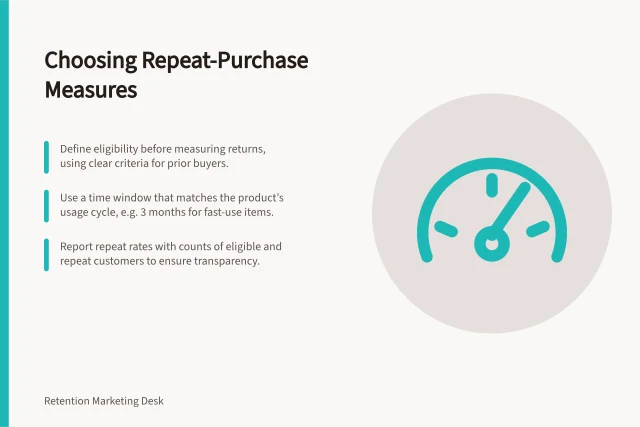
Separate customers with one completed order from those with repeat completed purchases. Keep refunds and cancelled orders out of the repeat count if the system’s reporting allows it.
Clues worth checking before treating an order as a gift
- Gift wrapping or a gift message attached to the order
- Delivery went to a recipient other than the buyer
- The category is strongly occasion-led
- Cautiona differing delivery address could be a workplace, and a gift card buyer may return for themselves — no single field settles motive
Match the follow-up to what is known
For a likely gift purchase, offer help with a future occasion or product care that the buyer can pass on, if contact preferences permit. Avoid a “time to buy another” message unless a repeat need has actually emerged. Repeat customers can be grouped by category and rhythm, but should still be given a relevant choice rather than an automatic discount.
Sample borderline profiles before automating. Record which evidence placed someone in the group, when it expires and how a second purchase changes their route. A useful segment expresses uncertainty honestly and makes the next contact more helpful.
Gift-likely buyer vs repeat customer: what the next contact should do
- Likely gift purchaseOffer help with a future occasion or product care the buyer can pass on, if contact preferences permit; avoid a “time to buy another” message unless a repeat need has emerged
- Repeat customerGroup by category and rhythm, but give a relevant choice rather than an automatic discount
Sorting a buyer into a gift-likely group without over-claiming
- Separate customers with one completed order from those with repeat completed purchases
- Keep refunds and cancelled orders out of the repeat count where reporting allows
- Check the defensible clueswrapping, message, recipient, occasion-led category — before labelling intent
- Sample borderline profiles before automating the follow-up
- Record which evidence placed the customer in the group, when it expires, and how a second purchase changes their route